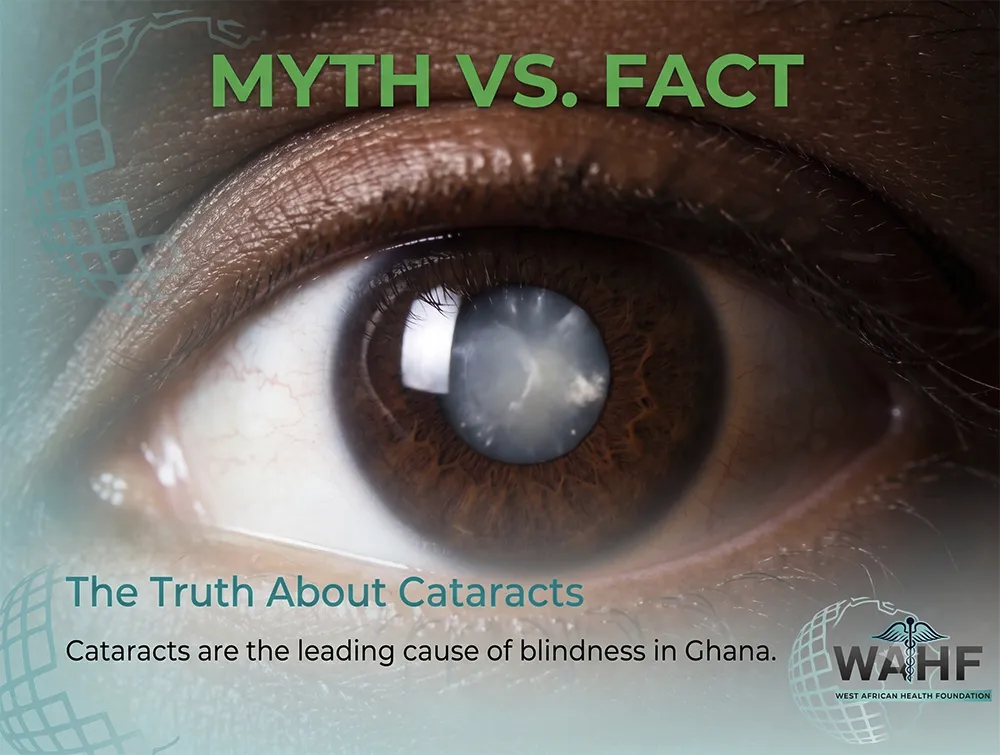
In Ghana, hundreds of thousands of people are currently living in darkness due to a condition that is entirely reversible. This condition is not a mystery or a rare disease; it is cataracts.
As part of the West African Health Foundation’s mission to eliminate preventable blindness, we believe education is the first step toward healing. This week, we are shining a light on cataracts: what they are, how they are treated, and why restoring sight is the key to restoring livelihoods.
What Exactly is a Cataract?
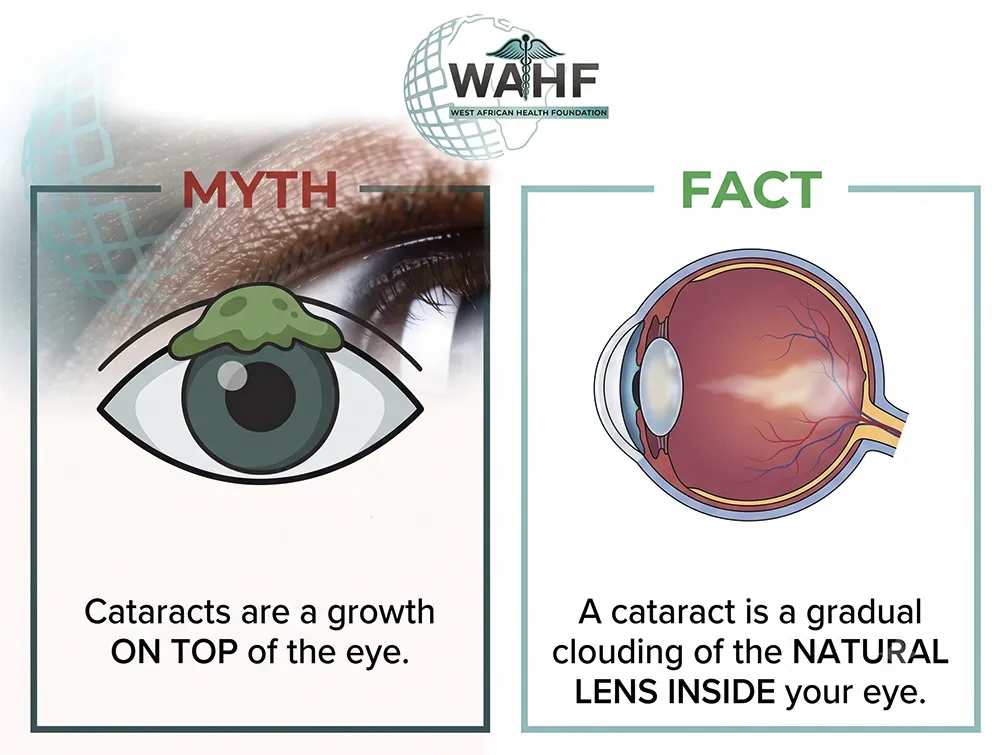
Inside everyone’s eye is a crystal-clear lens, similar to the lens of a camera. This lens is responsible for focusing light, allowing us to see sharp, clear images.
A cataract occurs when the natural proteins in this lens begin to clump together. This clumping causes the lens to gradually become cloudy or opaque, blocking light from reaching the retina.
Think of it like trying to look through a fogged-up car windshield or a window that hasn’t been cleaned in years. As the cataract grows, the fog becomes denser, until vision is lost.

The Warning Signs: Recognizing Symptoms
Cataracts usually develop slowly, but as they progress, they cause distinct changes in vision. If you or a loved one are experiencing the following, it is essential to seek an eye examination:
- Cloudy or Blurry Vision: Things look foggy, hazy, or as though you are constantly looking through a film.
- Difficulty Seeing at Night: Vision deteriorates significantly in low-light conditions, making night driving difficult.
- Glare and Halos: Bright lights, headlights, and sunlight may seem blinding, or you may see rings (halos) around light sources.
- Faded Colours: Colours appear dull, muted, or yellowish.
- Frequent Prescription Changes: A need to constantly change eyeglasses or contacts.
The Truth Behind Cataract Treatment: Simple and Quick
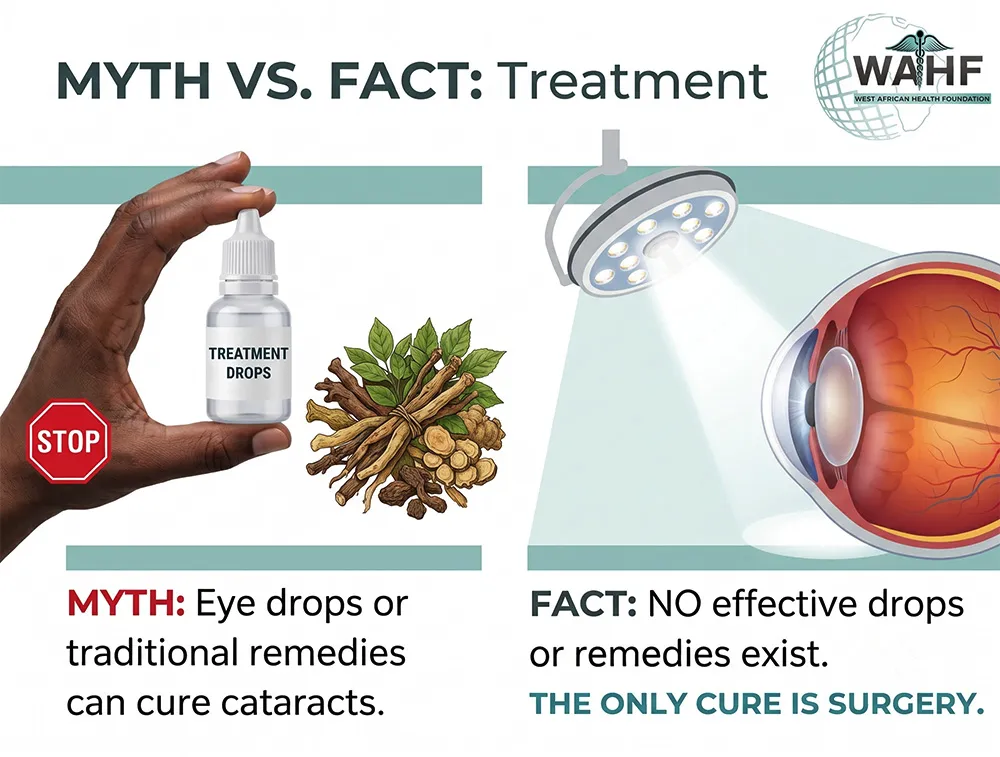
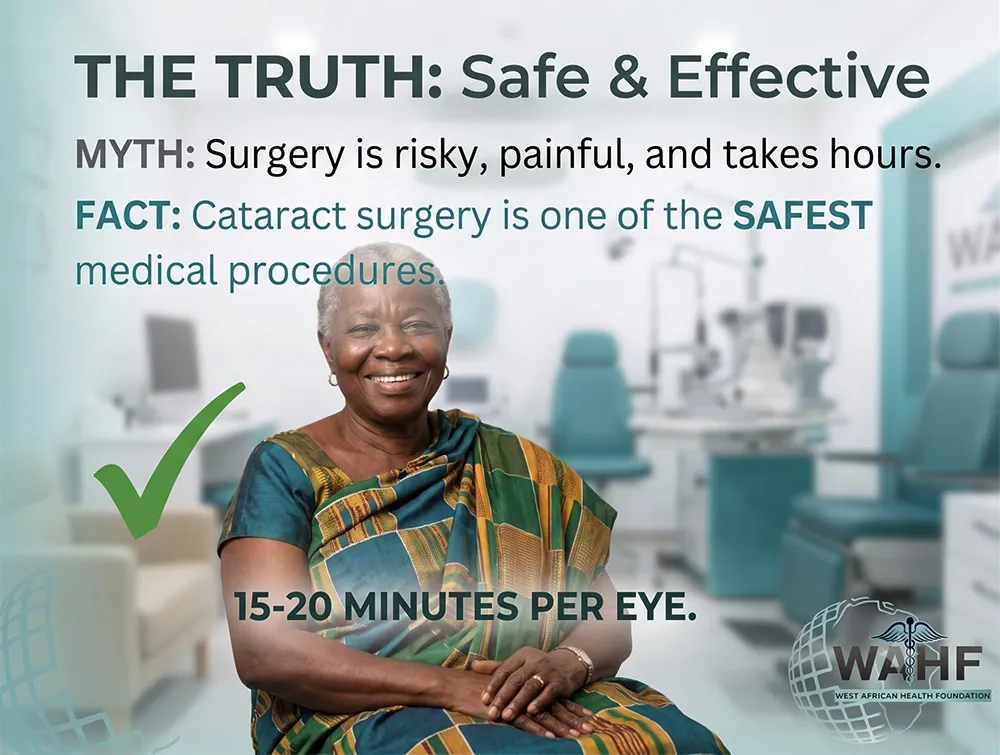
The single most important fact about cataracts is this: They do not require lifelong medication or traditional remedies. The only proven cure is surgical correction.
Fortunately, modern cataract surgery is one of the most common, safest, and most effective medical procedures performed worldwide.
The process is incredibly straightforward:
- A specialist eye surgeon makes a tiny incision in the eye.
- The cloudy, natural lens is gently broken up and removed.
- It is replaced with a clear, permanent, artificial lens called an intraocular lens (IOL).
The entire procedure typically takes just 15 to 20 minutes per eye. Most patients notice a dramatic improvement in their vision within 24 hours of surgery. It is that simple.
The Ripple Effect: Socioeconomic Impact
When a grandfather in rural Ghana loses his sight to a cataract, the impact is felt far beyond his own life.
Untreated vision loss strips individuals of their independence. It means they can no longer farm, trade, or contribute to their household income. Often, a younger relative—sometimes even a child—must leave school or their job to act as a full-time caregiver.
Cataracts trap entire families in cycles of economic dependency.
Closing the Gap at Juaben
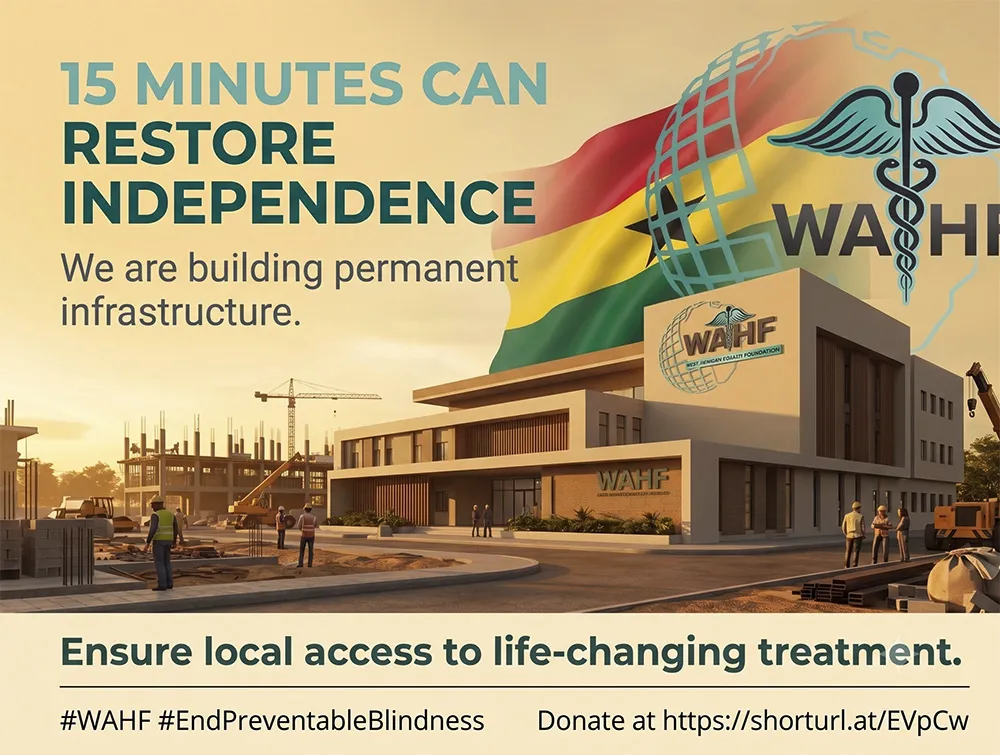
This ripple effect is why the WAHF Juaben Specialist Eye Institute matters so much. By providing permanent, localized access to 15-minute cataract surgeries, we are not just correcting eyes; we are returning grandparents to their families, parents to the workforce, and children to their classrooms.
Cataracts cause preventable blindness. Together, with accessible, specialist care, we are working to end it.