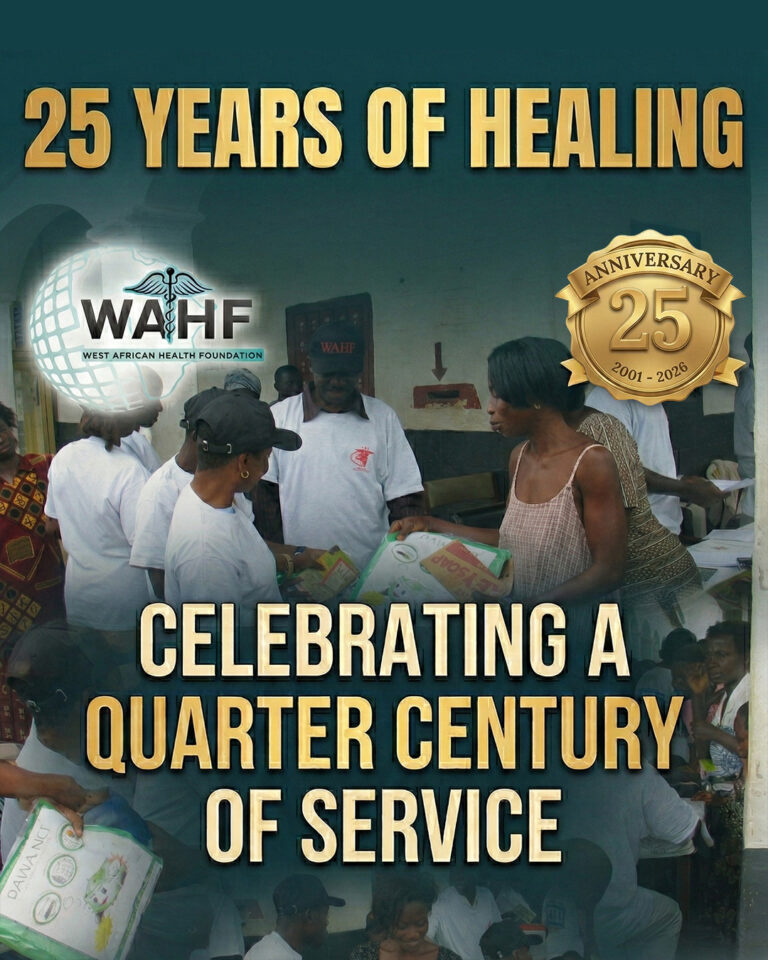
After two and a half decades of dedicated annual medical missions, comprehensive malaria control, environmental sanitation, and public health education, the West African Health Foundation (WAHF) is looking to the future. Over the next 25 years, WAHF is transitioning from primarily conducting community outreach to becoming a major health system provider driving clinical excellence and global cooperation in health.
At the heart of this vision is our commitment to improving health delivery outcomes in Ghana and the broader West African sub-region by building a comprehensive, state-of-the-art healthcare institution.
Phase 1: The WAHF Eye Institute The first phase of our Tertiary medical centre of Excellence is the Eye Institute, which is currently about 80% complete in the Juaben municipality. Once finished, this institution will provide advanced clinical and surgical services, diagnostics, research, and community programs dedicated to eye health and the prevention of avoidable blindness.

Phase 2: A 250-Bed Eco-Friendly Medical Center The next phase involves establishing a 250-bed eco-friendly “green” specialist tertiary care medical centre at Juaben. Equipped with high-tech infrastructure, this patient-centred hospital will serve as a regional hub for complex and specialty cases that local rural clinics cannot accommodate. WAHF is dedicated to ensuring these quality medical services remain affordable and accessible, particularly to poor populations in rural communities.
Building Capacity and Driving Research To ensure sustainable healthcare improvement, we must build local expertise. WAHF is partnering with Kwame Nkrumah University (KNUST) in Kumasi to develop robust post-graduate and professional training programs for healthcare workers.
This capacity-building initiative will include:
- The establishment of an ICT-enabled learning and distance education centre for professional development.
- Collaborative research with KNUST focusing on public health, clinical science, medicinal plants, epidemiology, and disease prevention.
- Strategic partnerships with global health institutions and experts to share best practices.